





Crawl Space Encapsulation vs. Vapor Barrier in Atlanta: Which Fixes Moisture Problems Long-Term?
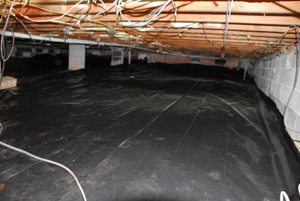
Atlanta’s humid summers, heavy rain bursts, and clay soils make crawl spaces sweat. That moisture travels into your living space, fuels odors, and can invite pests. If you are comparing crawl space encapsulation vs. a vapor barrier, here’s the straightforward answer: both block ground moisture, but they perform very differently over time. Below, we break it down so you can choose the fix that actually lasts in Buckhead, Midtown, Decatur, Roswell, and everywhere in between. For deeper detail on full sealing, see our page on crawl space encapsulation.
As a local crawl space insulation team, Southeastern Crawlspaces has seen nearly every scenario in the Metro area. We focus on solutions that stand up to Georgia humidity, not just a single season. Keep reading to compare durability, comfort, and air quality impacts so you can make a smart call for your home.
What Each Option Does in Atlanta Homes
Crawl space vapor barrier: A vapor barrier is a plastic liner laid on the crawl space floor to reduce water vapor moving into the air. It is a moisture reducer, not a total seal. Gaps, tears, or missing wall coverage let air and moisture still move around the space.
Crawl space encapsulation: Encapsulation treats the crawl space as part of your conditioned envelope. It typically includes a heavy-duty liner across the floor and up the walls, sealed seams, air sealing, and isolation from outside damp air. The goal is a clean, closed, stable environment that supports better air quality and comfort.
Moisture Performance and Long-Term Results
Atlanta’s climate is hard on materials. A thin liner laid flat on the ground may help for a time, but it can shift during service visits or seasonal soil movement. Encapsulation adds wall coverage, taped or welded seams, and perimeter sealing to control moisture pathways instead of just covering dirt. That extra control is what usually delivers long-term results in high-humidity areas.
Vapor Barrier Thickness and Seams
Thickness matters. Many homeowners ask what to choose. In our climate, liners used for long-term crawl space work are commonly in the 12 to 20 mil range with reinforced scrim and strong seams. A thin, non-reinforced film is more likely to tear at high-traffic spots and around piers. Whatever you select, seam quality and attachment to walls are as important as thickness because those are the points that fail first.
Air Quality, Energy, and Comfort
Your home “breathes” through the crawl space. When that air is damp or musty, it can reach the living area. Encapsulation reduces the air exchange and stabilizes humidity, which helps with comfort and supports a healthier environment. A basic floor-only vapor barrier reduces evaporation from the soil but does little to limit humid outdoor air that slips in through vents and rim joists.
- Encapsulation can help floors feel warmer in winter and less clammy in summer.
- A sealed crawl can reduce the workload on HVAC by limiting humid air infiltration.
- A floor-only vapor barrier focuses on ground moisture and offers partial benefit.
If you are improving indoor comfort room by room, consider where your crawl space sits in the whole-house picture. Linking envelope control from the crawl space to the floors to ducts often yields the biggest comfort gain.
When a Vapor Barrier Is Enough vs. When Encapsulation Makes Sense
Every crawl space tells a different story. These simple guidelines help you set expectations:
- Choose a vapor barrier if the crawl is dry, you have minimal ventilation openings, and you mainly need to tame light ground dampness.
- Choose encapsulation if you notice persistent odors, high humidity, sweating ducts, seasonal mold growth, pest issues, or comfort swings above the crawl.
- Homes near creeks or low-lying lots in places like Smyrna, Sandy Springs, and East Point tend to benefit more from a sealed approach.
- Never rely on any liner to solve active water intrusion; drainage corrections are addressed before moisture control is installed.
Atlanta-Specific Factors That Affect Your Choice
Humidity and dew points: Summer dew points in Atlanta are frequently high, which means outside air carries a lot of moisture. Vented crawl spaces invite that air in. Encapsulation limits the path for that moist air to enter.
Clay soils and splashback: Our red clay holds water after storms. Splashback off short overhangs can raise crawl humidity. Encapsulation provides more margin when the weather bounces between very wet and very hot.
Mixed-age neighborhoods: Older homes in Grant Park and Kirkwood may have quirky crawl spaces with irregular piers. That makes seam strength and wall attachment even more important so the liner stays put during service work.
Material Quality and Installation Approach
Not all liners are equal. Reinforced materials with strong seams and mechanical fastening at the walls offer greater durability. In a sealed design, transitions around piers and along the sill plate get special attention because those are common leak paths. The extra detailing pays off in long-term stability, especially in busy crawls with plumbing or electrical access.
Homeowners sometimes ask whether a thicker floor-only barrier can match a full system. It can help with ground moisture, but it does not manage humid air through vents, rim gaps, or access doors. Encapsulation addresses those pathways, which is why it tends to deliver a more predictable result in our climate.
How This Impacts Energy and HVAC
Humid air is harder to condition. By limiting moisture movement from the crawl, you reduce how much your HVAC has to remove before cooling or heating kicks in. Over time, a stable, sealed crawl can support better HVAC performance and comfort. If you are planning upgrades, aligning crawl space work with duct sealing or insulation improvements can multiply the benefits.
A Simple Way To Decide on an Atlanta Home
Start with your goals. If you want the most predictable moisture control and comfort, encapsulation is the safer long-term choice for most Atlanta homes. If your main concern is mild dampness from the soil and the crawl is otherwise tight, a quality vapor barrier may meet your needs. To understand how encapsulation integrates with the rest of your house, you can review general guidance on crawl space encapsulation in Atlanta and see how it fits with your insulation and air sealing plans.
What Professional Encapsulation Involves
With a sealed system, a pro team prepares the space, addresses moisture sources, installs a reinforced liner across the floor and up the walls, and seals penetrations. Seams are taped or welded, and the perimeter is secured so the liner stays in place during future service visits. Vents and gaps are sealed to limit humid air exchange. The goal is a clean, accessible area that protects the rest of the home.
In contrast, a floor-only barrier focuses on covering soil. It is faster to install and can be a good interim step for lighter moisture concerns. Just remember that it does not manage humid air entering through vents or leaky access points.
Real-World Atlanta Examples
In Buckhead and Brookhaven, many homes have tall crawl spaces used for storage. Homeowners there tend to favor encapsulation for a cleaner, brighter space and less odor transfer. In older bungalows around East Atlanta Village, tighter footprints sometimes get by with a robust floor barrier if humidity is low and there are minimal openings. Roswell and Marietta homes on sloped lots often see strong results from sealing because wind-driven rain and elevated humidity can swing quickly week to week.
Risks of Choosing Too Little Protection
When a liner is too thin or only covers part of the space, it is easier to tear around piers and along footpaths. That damage restarts moisture movement. Over time, you could be chasing odors and dampness again. Choosing materials and an approach that fit Atlanta’s climate reduces those risks and helps your home feel consistent through spring pollen season, summer humidity, and fall storms.
Which Option Fixes Moisture Problems Long-Term?
If you want a set-it-and-forget-it solution in Atlanta, encapsulation provides the most complete, predictable control across seasons. A well-installed vapor barrier can be a smart choice for lighter moisture situations, but it is not a full seal. To compare details or schedule an assessment, you can explore crawl space encapsulation and see how it differs from a traditional barrier.
Talk With a Local Specialist
Moisture challenges vary by neighborhood, crawl height, and the amount of mechanical equipment below your floors. Our team at Southeastern Crawlspaces is happy to evaluate your space and recommend an approach that fits your home and goals. If a floor barrier is the right call, we will say so. If sealing is the better long-term fix, we will explain why in clear terms.
Ready to breathe easier and reduce moisture worries? Call 404-821-2711 or compare materials and methods for a crawl space vapor barrier to get started today.
More Tips on Crawl Space Encapsulation








